
Packaged Air Conditioners
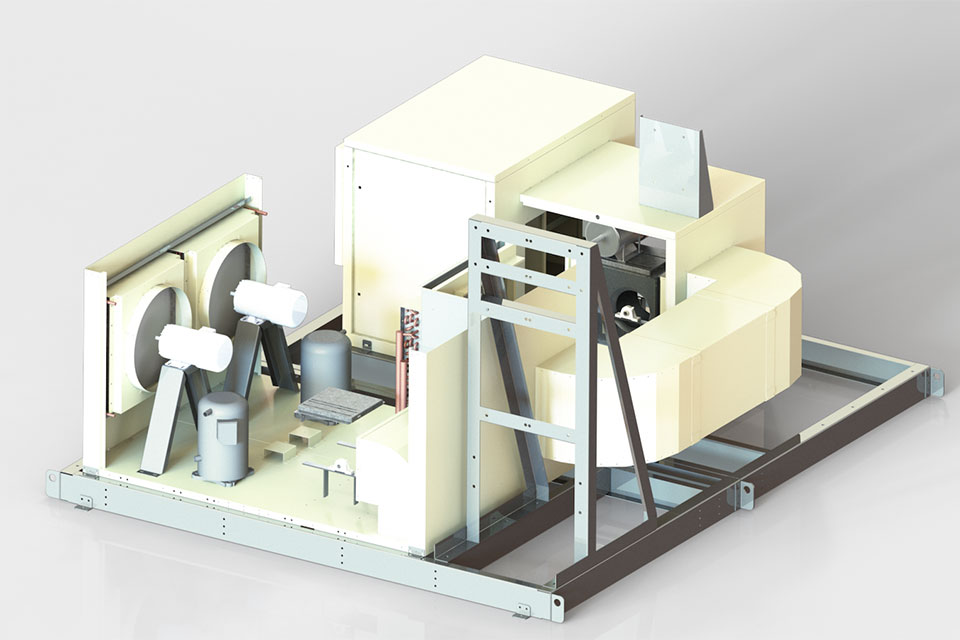
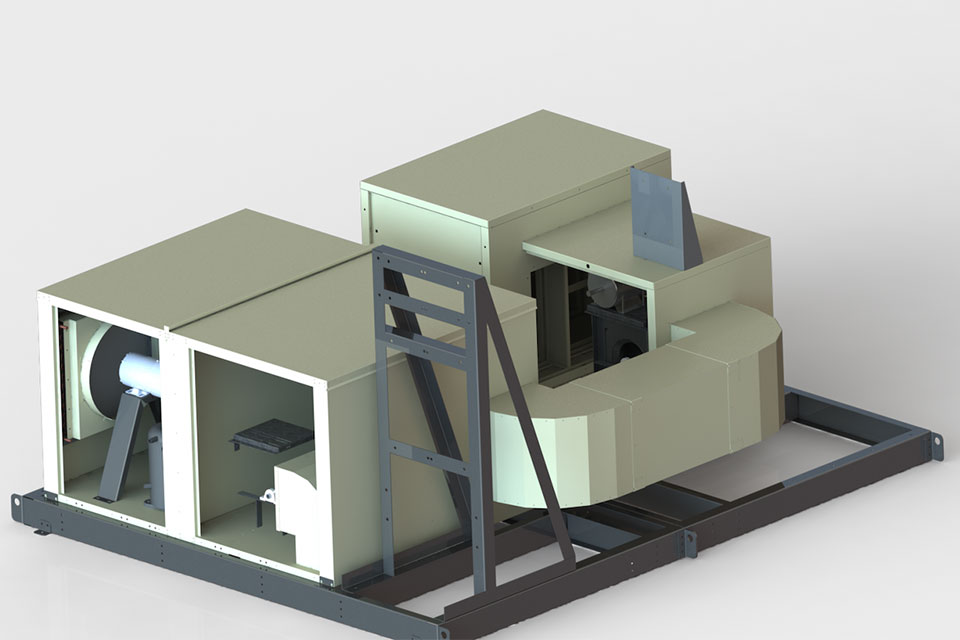
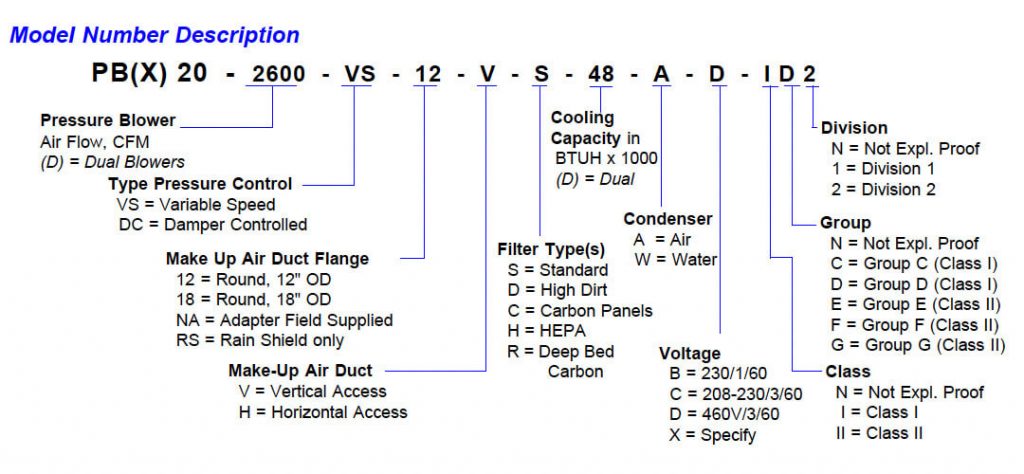
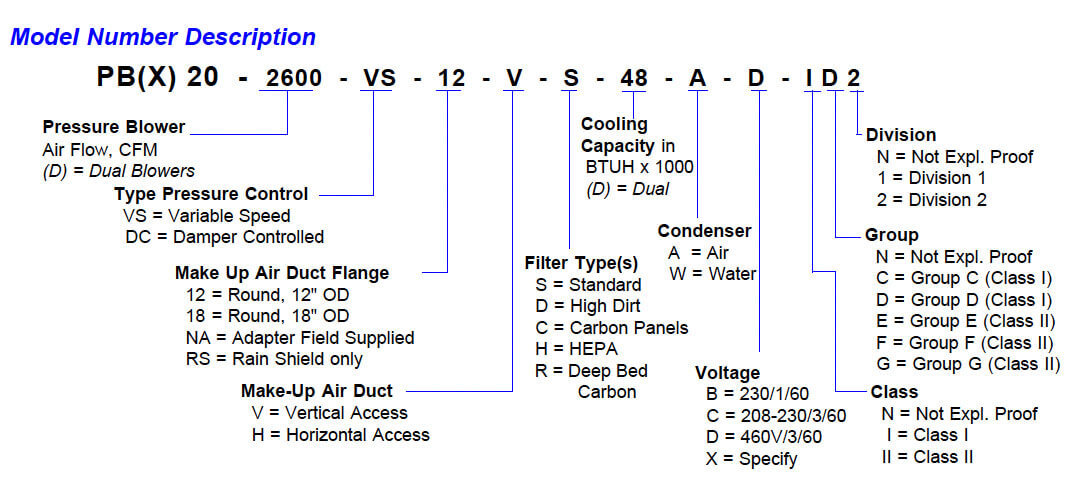
How to Order PB 20 Series Packaged Air Conditioner
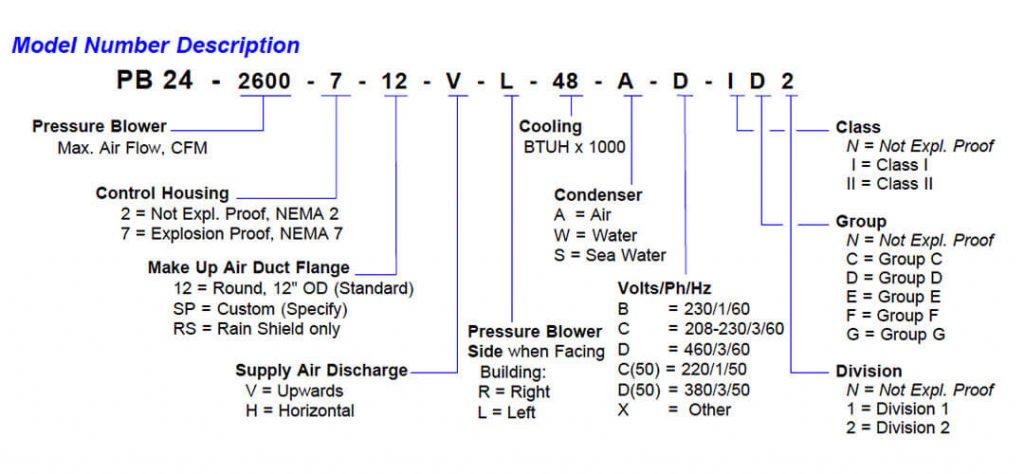
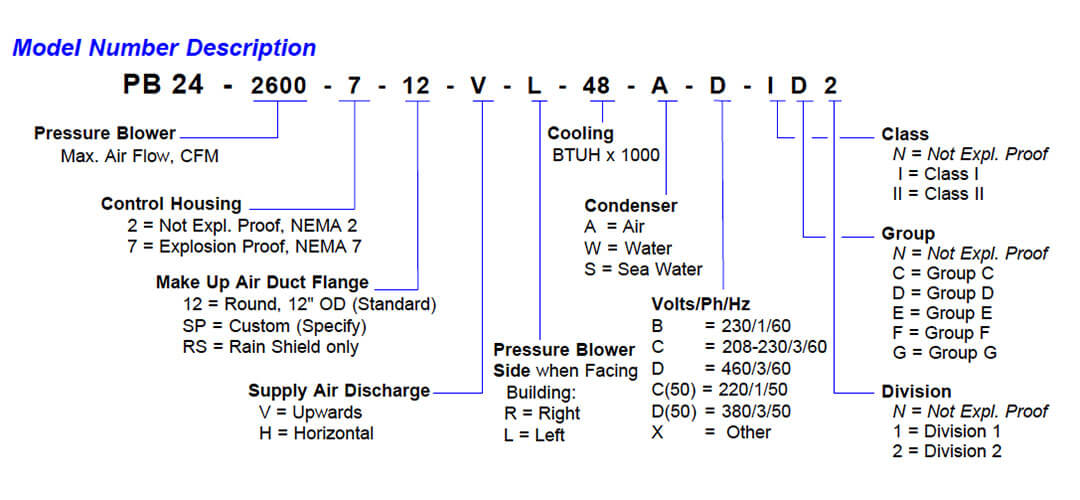
How to Order PB 24 Series Packaged Air Conditioner
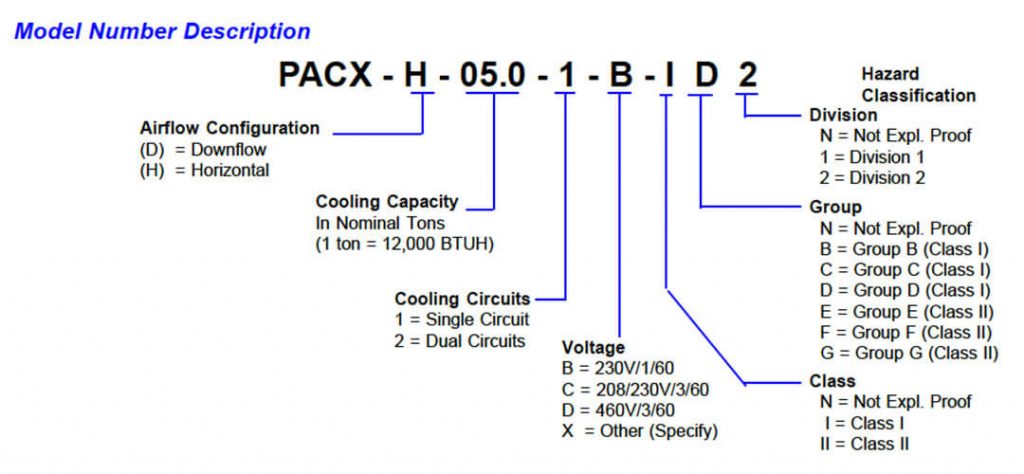
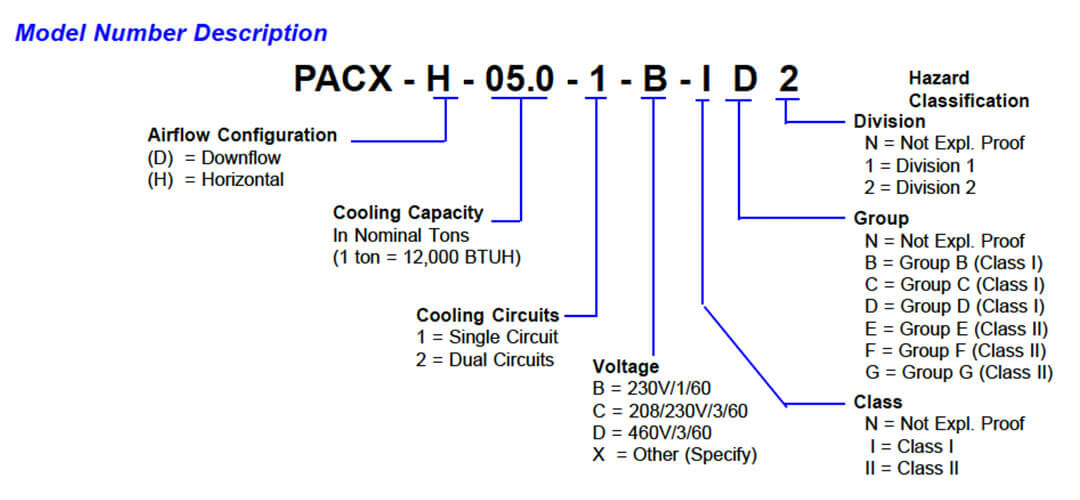
How to Order PACX Explosion Proof Packaged Air Conditioners
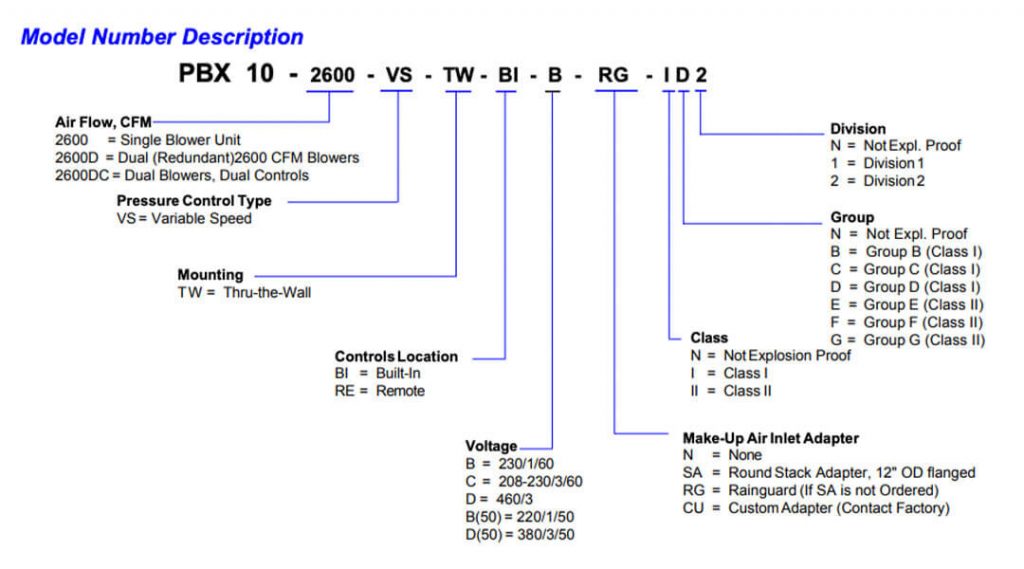
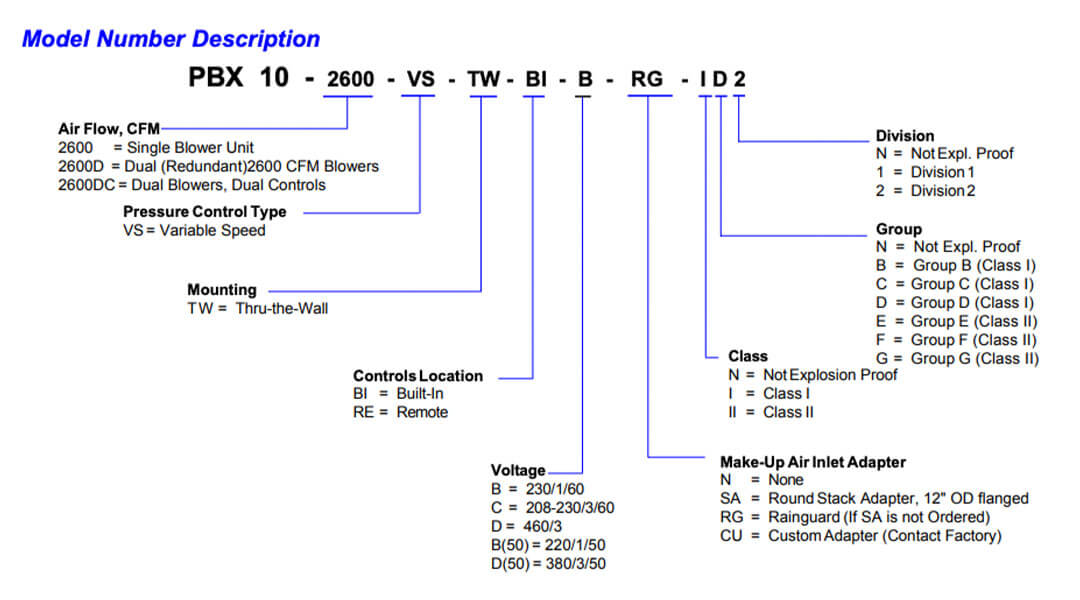
How to Order PB 10 Series Pressure Blowers
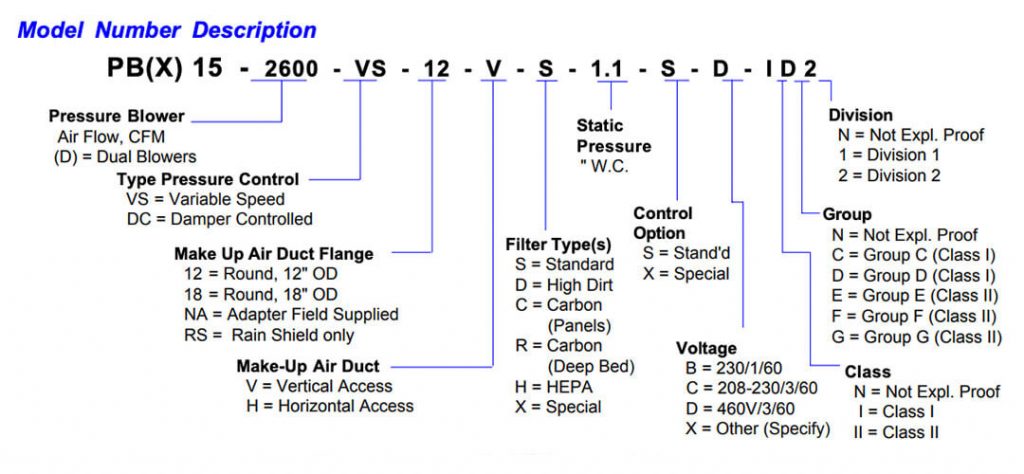
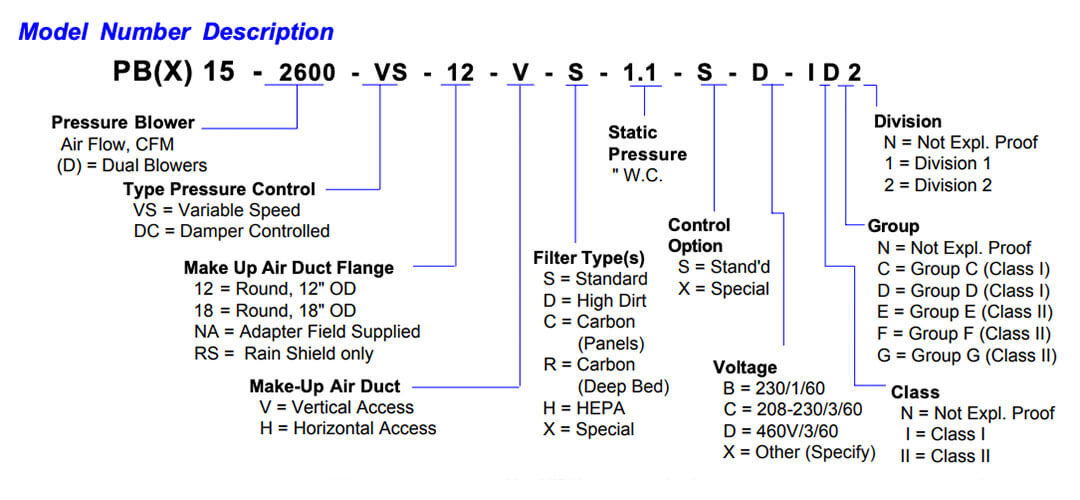
How to Order PB 15 Series Pressure Blowers
Packaged Air Conditioners with Room Pressurization/Filtration
Industrial Control Rooms, Analyzer Buildings, Motor Control Centers, and other installations in or near hazardous or dusty locations require both packaged air conditioning and pressurization. NFPA, API, and related industrial codes mandate both the building pressure and the airflow across a door or other openings that must be maintained. Pre-assembled and pretested PB(X) 20 systems provide these functions automatically. The control panel includes all controls for setting and monitoring room temperature, pressure, and pressure loss alarm. Models specified as “Explosion Proof” comply with Articles 500-503 of the National Electric Code (NEC) for Class I, Groups C and D or Class II, Groups F and G, Divisions 1 and/or 2.
A low noise, Vari-Speed blower automatically maintains the desired building pressure. The supply air can be limited to the amount required to offset air loss from the pressurized structure and from door openings. The results are lower heating and cooling requirements, substantial energy conservation, and lower operating costs. Gone are sluggish responses and the repeated need for adjustment and maintenance of damper-controlled designs.
Maximum make-up airflow can be specified in the range of 1300 to 6000 cu-ft per minute. The matched packaged airconditioning system operates in a recirculating mode. Ample external static pressures allow for any required distribution ducts. Cooling capacities range from 2 to 50 tons. The built-in housing will accept a wide variety of air filters for particulate or gas-phase corrosion and odor control media. Additional options are an audible pressure loss alarm, timer-controlled air purge, and gas detectors.
Industrial Control Rooms, Analyzer Buildings, Motor Control Centers, and other installations in or near hazardous or dusty locations require both packaged air conditioning and pressurization. NFPA, API, and related industrial codes mandate both the building pressure and the airflow across a door or other openings that must be maintained. Pre-assembled and pretested PB(X) 20 systems provide these functions automatically. The control panel includes all controls for setting and monitoring room temperature, pressure, and pressure loss alarm. Models specified as “Explosion Proof” comply with Articles 500-503 of the National Electric Code (NEC) for Class I, Groups C and D or Class II, Groups F and G, Divisions 1 and/or 2.
A low noise, Vari-Speed blower automatically maintains the desired building pressure. The supply air can be limited to the amount required to offset air loss from the pressurized structure and from door openings. The results are lower heating and cooling requirements, substantial energy conservation, and lower operating costs. Gone are sluggish responses and the repeated need for adjustment and maintenance of damper-controlled designs.
Maximum make-up airflow can be specified in the range of 1300 to 6000 cu-ft per minute. The matched packaged airconditioning system operates in a recirculating mode. Ample external static pressures allow for any required distribution ducts. Cooling capacities range from 2 to 50 tons. The built-in housing will accept a wide variety of air filters for particulate or gas-phase corrosion and odor control media. Additional options are an audible pressure loss alarm, timer-controlled air purge, and gas detectors.
Explosion-Proof Packaged Air Conditioners
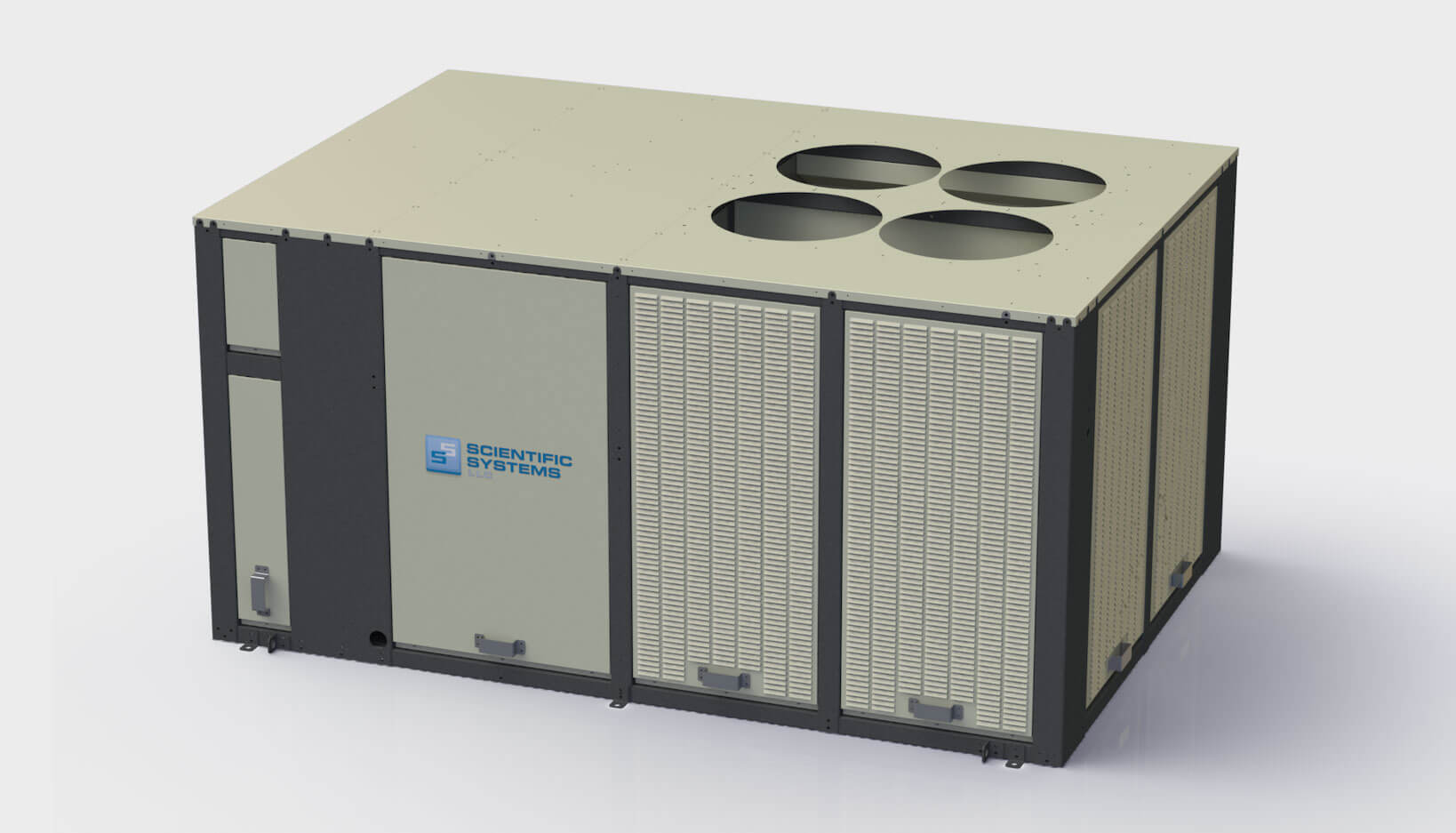
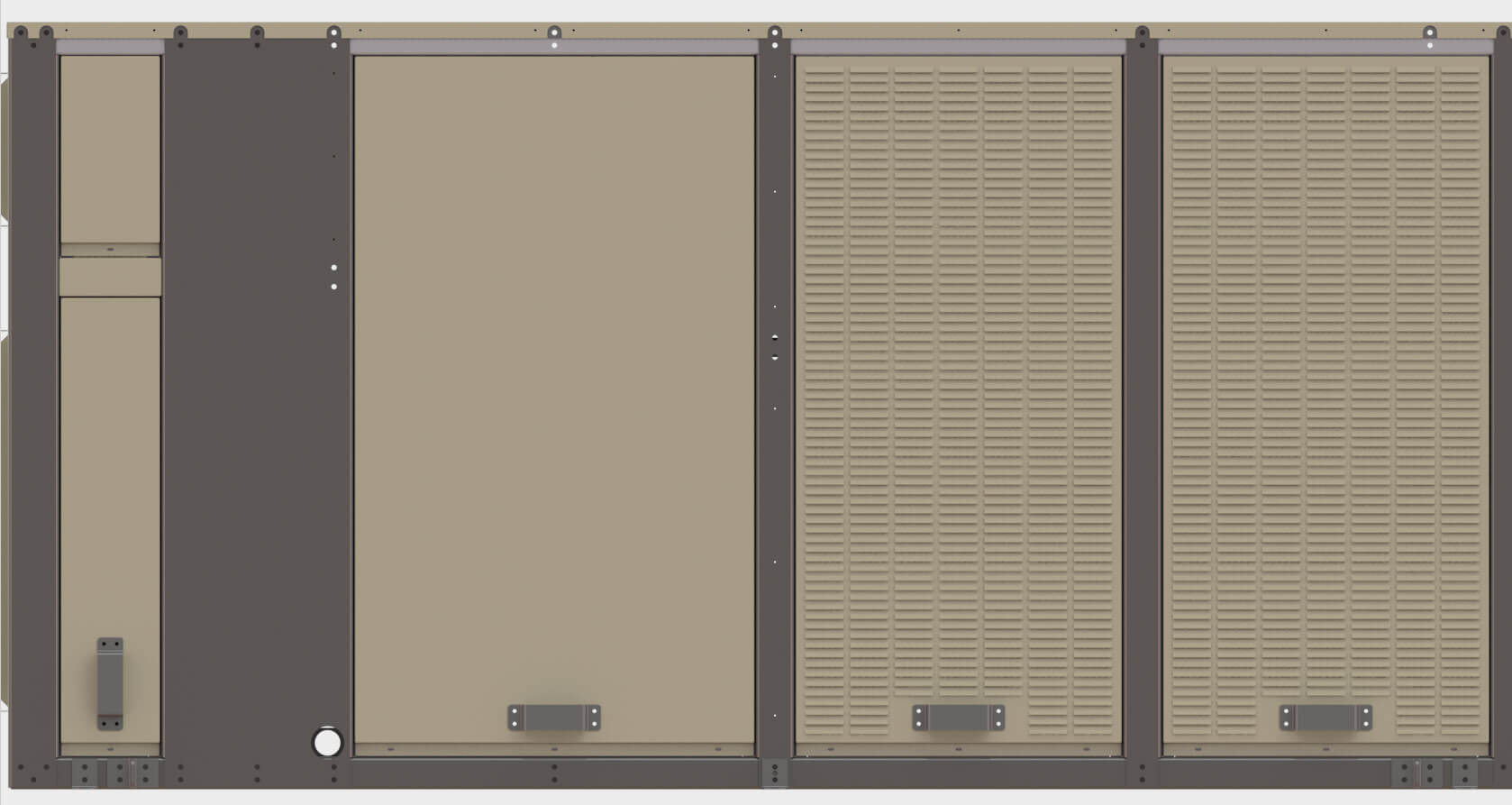
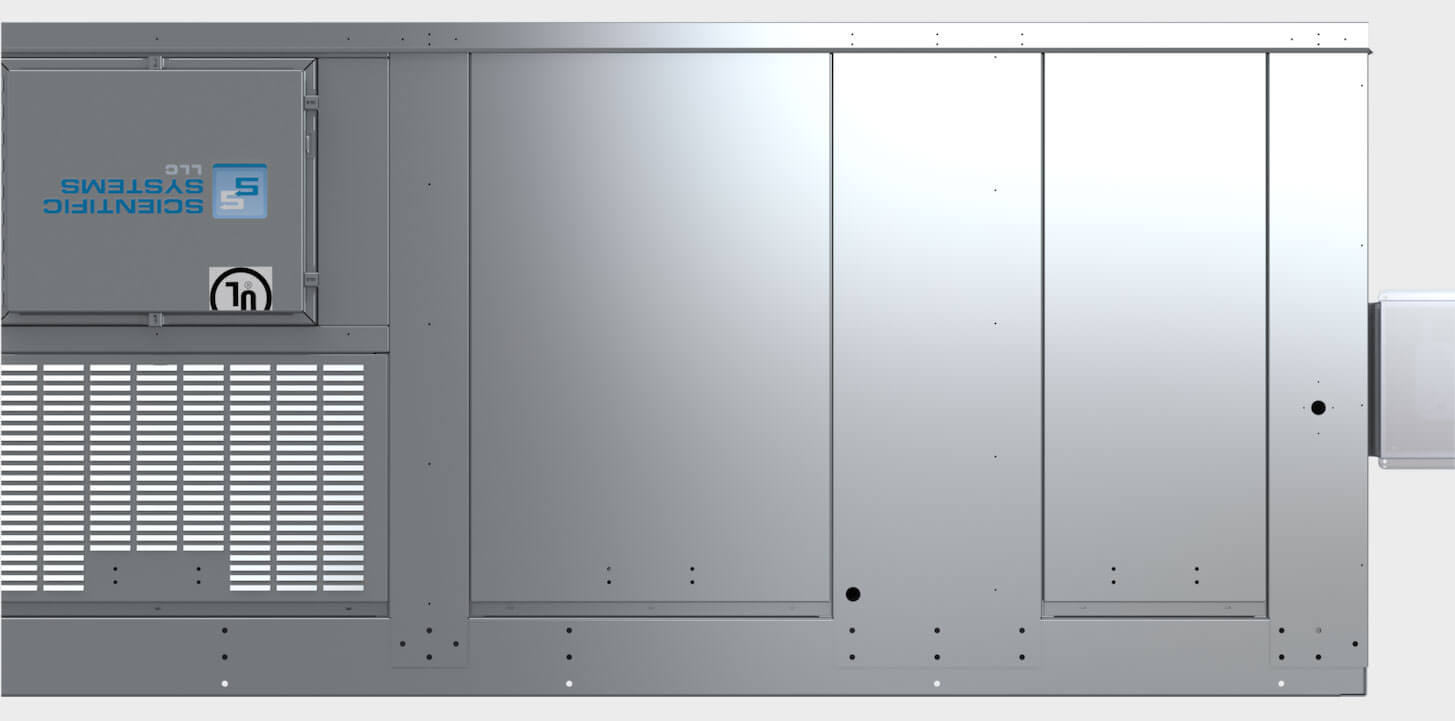
PACX Series Packaged Air Conditioners are self-contained, pre-assembled, and pre-charged industrial quality units for use in areas classified as hazardous. A wide range of models meets the requirements of Articles 500 – 503 of the National Electrical Code (NEC) for equipment operated in hazardous locations under Class I, Groups B, C, and D or Class II, Groups E, F, and G in Divisions 1 and 2. Every effort has been made to make PACX Series equipment safe, reliable, and long-lasting.
All packaged air conditioner units are easily field installed, requiring only minimal ductwork and a suitable power source. Models are offered in horizontal and downflow configurations for rooftop or ground-level installation. When simultaneous building pressurization is required, PBX Series Combined Air Conditioning / Pressurization modules are recommended (**). A wide range of other options and accessories include steam or electric (Division 2 only) heaters, corrosion-resistant epoxy finishes, SaveCoil 101 baked phenoxy coil coatings, head pressure controls, and particulate or gas phase air filter modules.
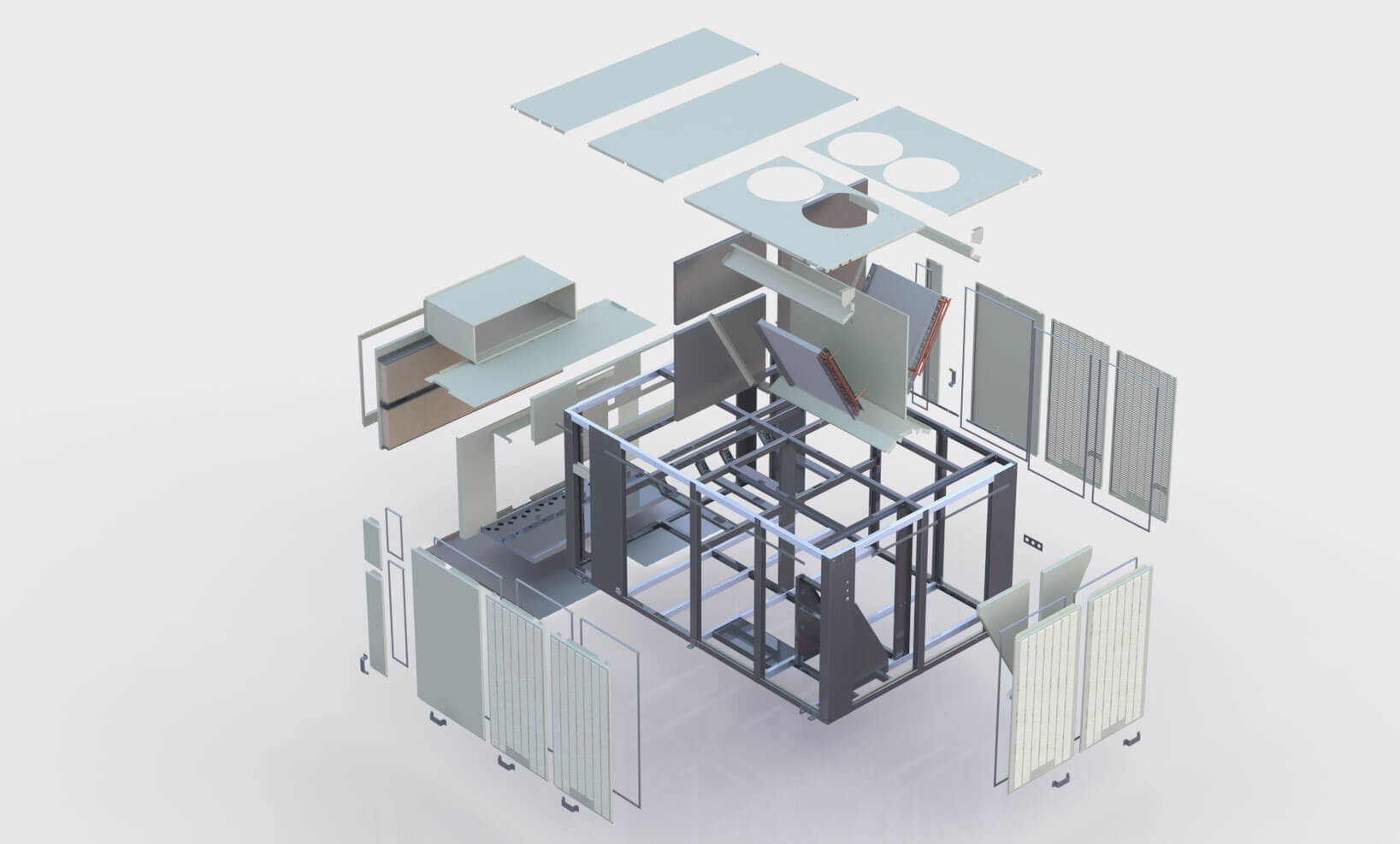
Packaged Air Conditioner Pressure Blowers
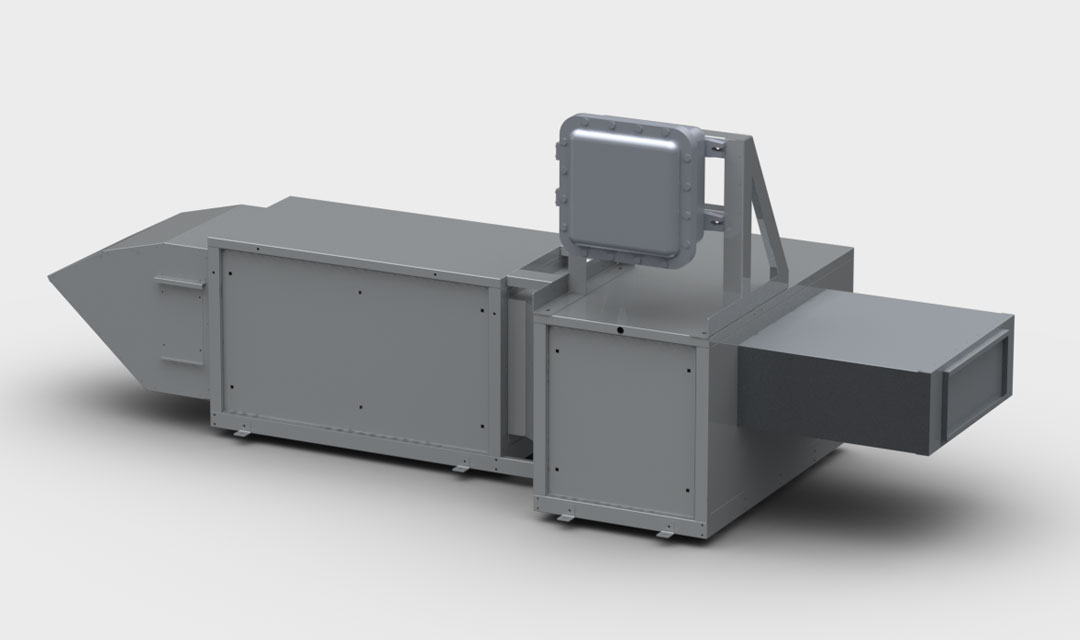
PBX 10 Series pressurization blowers are Scientific Systems LLC’s economical solution for maintaining positive room pressure, with customizable models that meet NFPA 496 standards for specified positive pressure and airflow in hazardous working environments. Our explosion-proof models comply with NEC Class I (Groups B, C, and D) and Class II (Groups F and G) codes under Division 2 and Class I (Groups C and D) and Class II (Groups F and G) codes under Division 1, meeting both American and Canadian safety standards.
Scientific Systems LLC’s PBX 15 Series controlled pressure blowers provide pressurization and air filtration for buildings in hazardous, dusty, or corrosive locations. The PBX 15 Series offers safe, ergonomic compliance with ISA, NFPA, API, and related industrial codes. Explosion-proof models are designed for use with NEC Class I (Groups C, and D) and Class II (Groups F, and G) codes under Divisions 1 and 2.
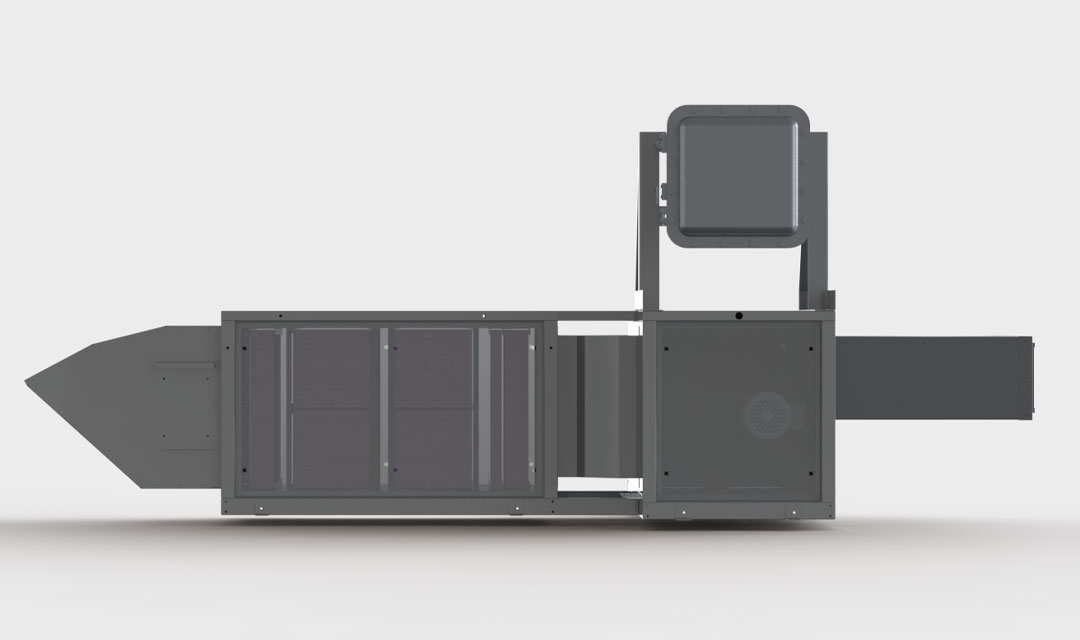
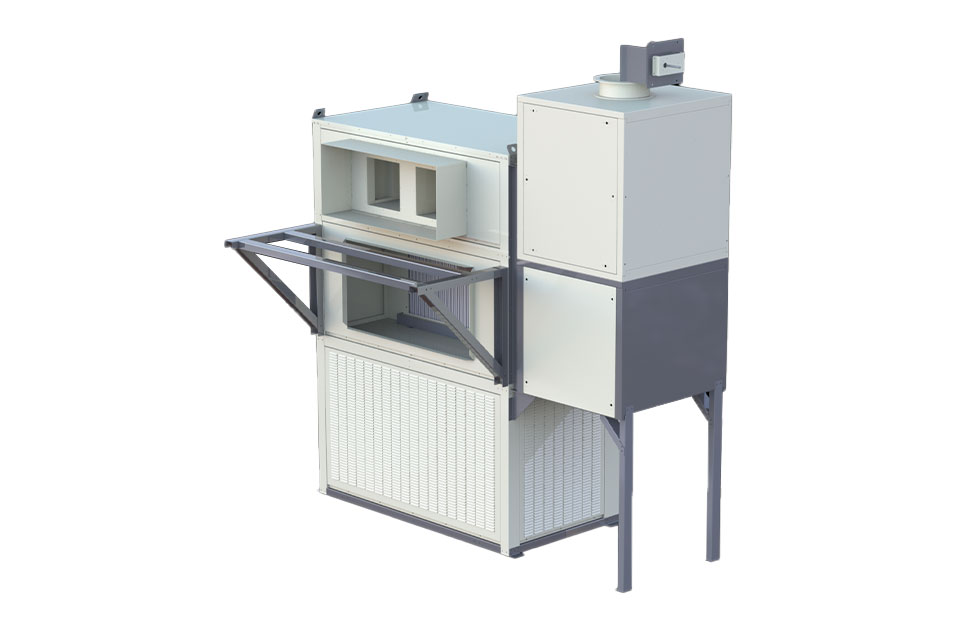
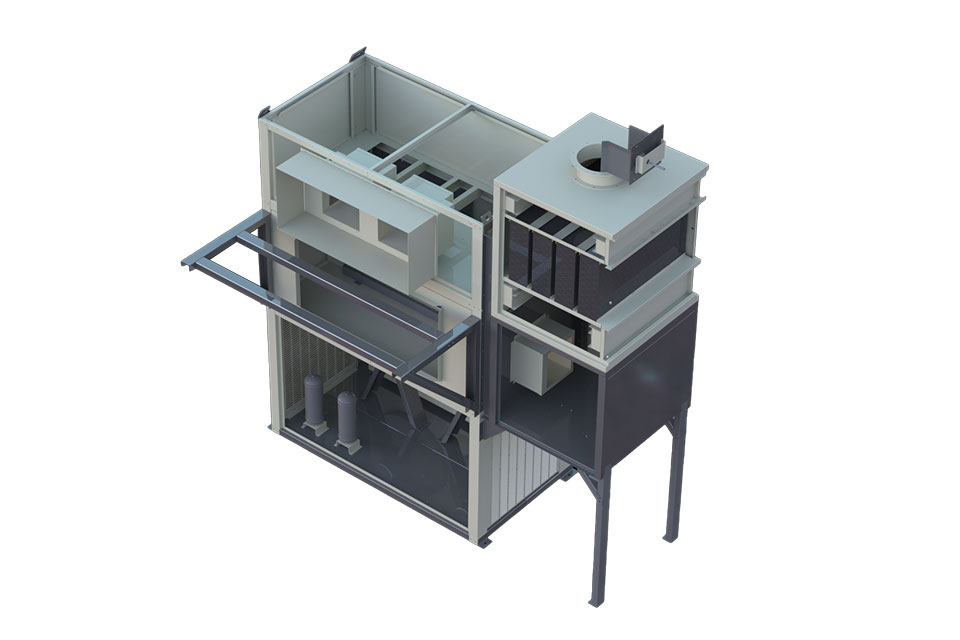
Self-contained, pre-assembled, and pre-charged industrial quality units engineered for the most volatile and critical environments. Includes explosion-proof options for Class I & II hazardous locations.
PACX Series
Explosion-Proof AC
Meets NEC Articles 500-503 for Class I, Groups B, C, D and Class II, Groups E, F, G (Div 1 & 2).
Read More →PB 10 Series
Pressure Blowers
Economical solution for maintaining positive room pressure up to 2600 CFM.
Read More →PB 15 Series
Pressure Blowers
Provides pressurization and air filtration for buildings in hazardous, dusty, or corrosive locations.
Read More →PB 20 Series
Combined AC / Pressurization
Combines AC with vari-speed blowers. 1300 to 6000 CFM make-up air range.
Read More →PB 24 Series
Combined AC / Pressurization
Heavy-duty combined system with NEMA 2 or NEMA 7 (Explosion-proof) control housings.
Read More →PACX Series Explosion-Proof Air Conditioners
PACX Series Packaged Air Conditioners are self-contained, pre-assembled, and pre-charged industrial quality units for use in areas classified as hazardous. A wide range of models meets the requirements of Articles 500 – 503 of the National Electrical Code (NEC).
Easily field installed, requiring only minimal ductwork and a suitable power source. Models are offered in horizontal and downflow configurations for rooftop or ground-level installation.
Available Configurations & Upgrades
PB 20 & PB 24 Series Combined Systems
Industrial Control Rooms, Analyzer Buildings, Motor Control Centers, and other installations in or near hazardous or dusty locations require both packaged air conditioning and pressurization.
NFPA, API, and related industrial codes mandate both the building pressure and the airflow across door openings. Pre-assembled and pretested PB(X) 20 and 24 systems provide these functions automatically.
Automated Vari-Speed Blower
Automatically maintains the desired building pressure. The supply air is limited to the exact amount required to offset air loss—resulting in substantial energy conservation and lower operating costs compared to sluggish damper-controlled designs.
PB 10 & PB 15 Pressure Blowers
PB 10 Series: An economical solution for maintaining positive room pressure. Customizable models meet NFPA 496 standards for specified positive pressure and airflow in hazardous environments.
PB 15 Series: Provides pressurization and heavy air filtration for buildings in hazardous, dusty, or corrosive locations. Offers safe, ergonomic compliance with ISA, NFPA, and API codes.
Engineering & Ordering Blueprints
Select a product line below to view specific ordering procedures, nomenclature breakdowns, and engineering spec sheets.
Request for Information
Fill out our form to request technical information, blueprints, or a specialized quote for your facility.
Configure this product and get pricing in minutes — powered by our online proposal builder.